Intro
/ 01 — 2026
Archive
01 films
The Weight of Feeling
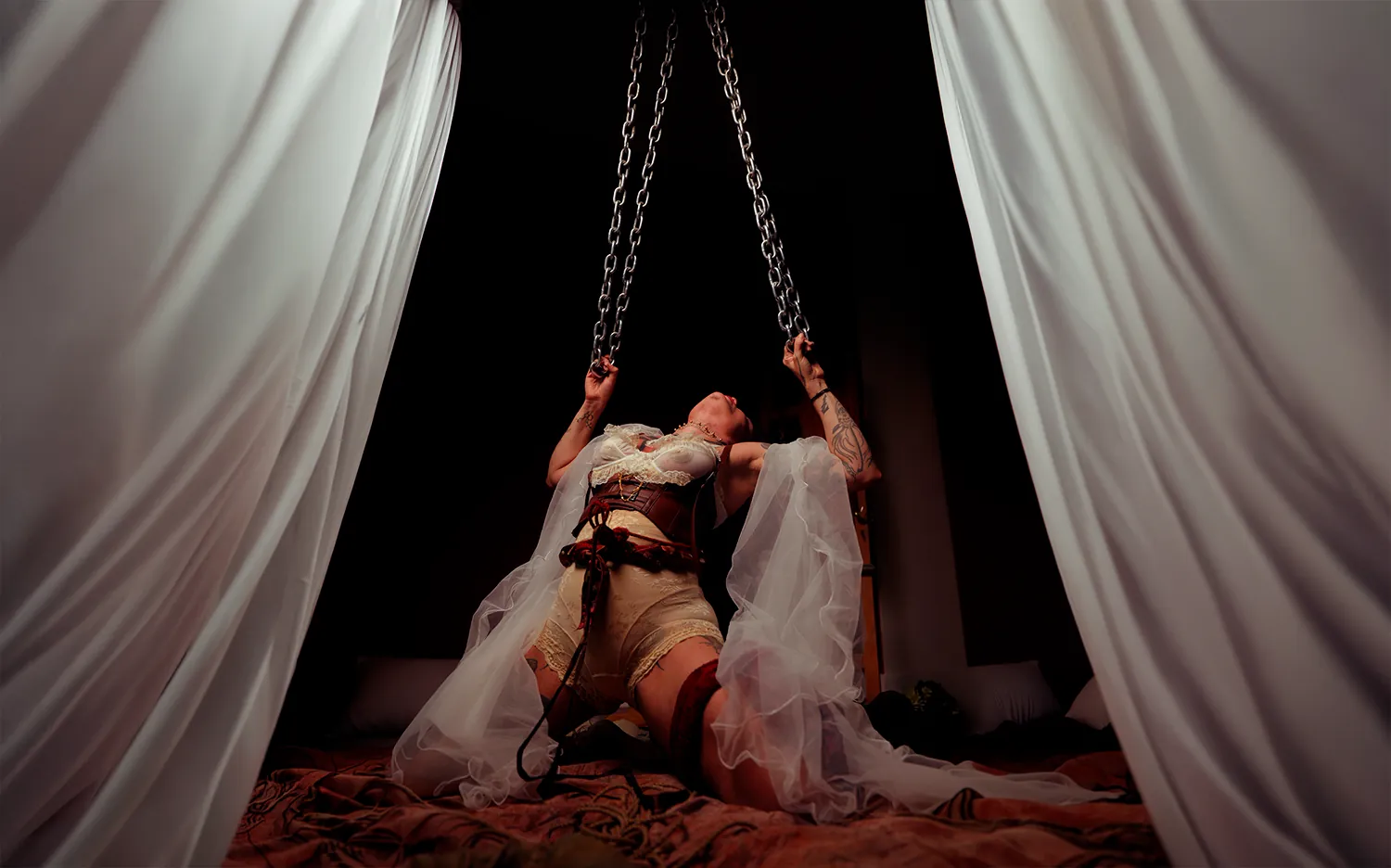
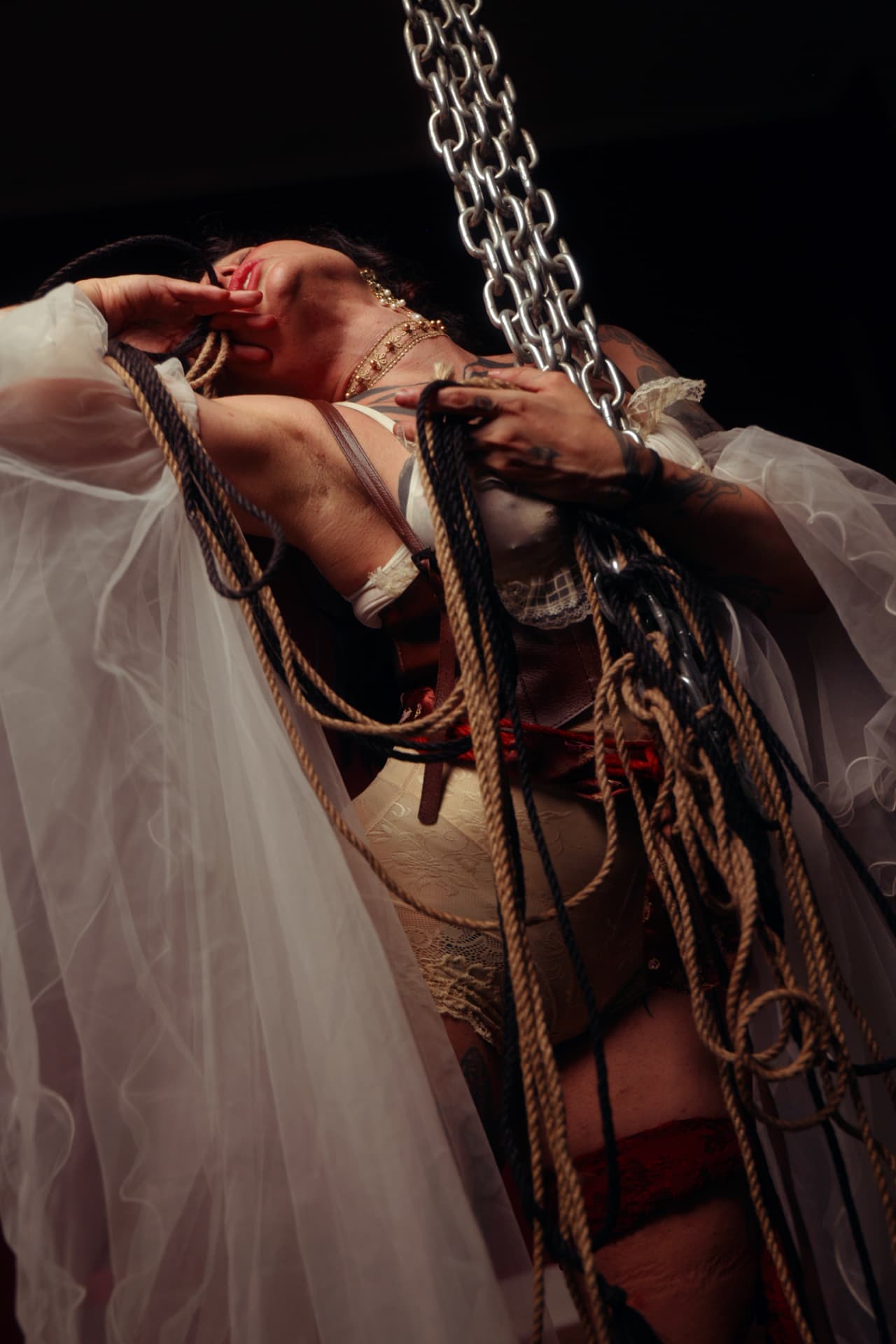
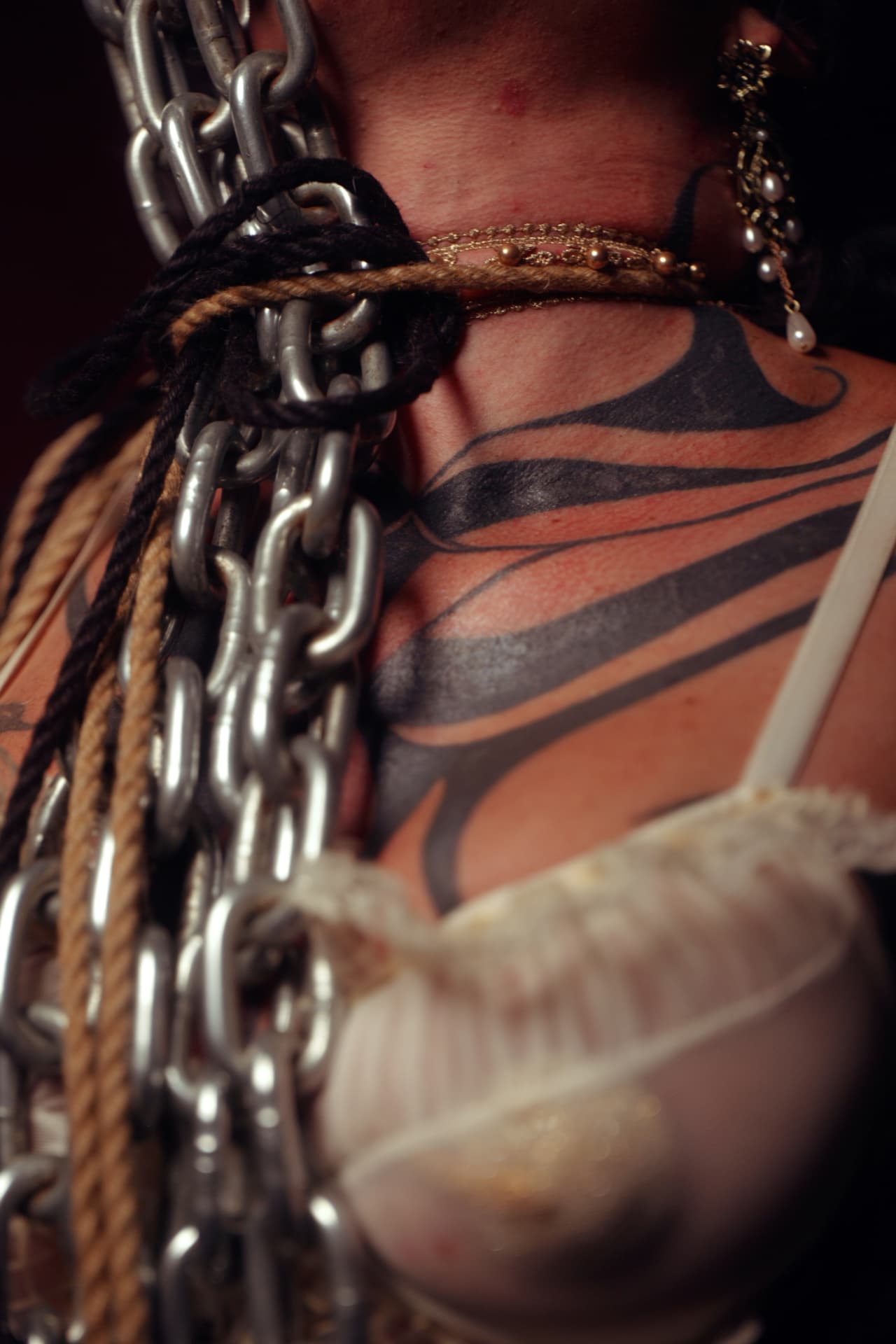
Suspended steel, a ring, and the quiet mechanics of holding something that has no body. The work measures affection as load: what it costs to carry, to hang, to be held.
© 2026
Statement
Suspended steel, a ring, and the quiet mechanics of holding something that has no body. The work measures affection as load: what it costs to carry, to hang, to be held.
The chains operate as an instrument of weight and suspension — an apparatus where emotion is treated as a material with mass, tension and a point of rupture.
01 — Text
Between the sculptural object and the body that inhabits it, the piece proposes a study of dependency: what supports, what restrains, and what remains once the load is released.
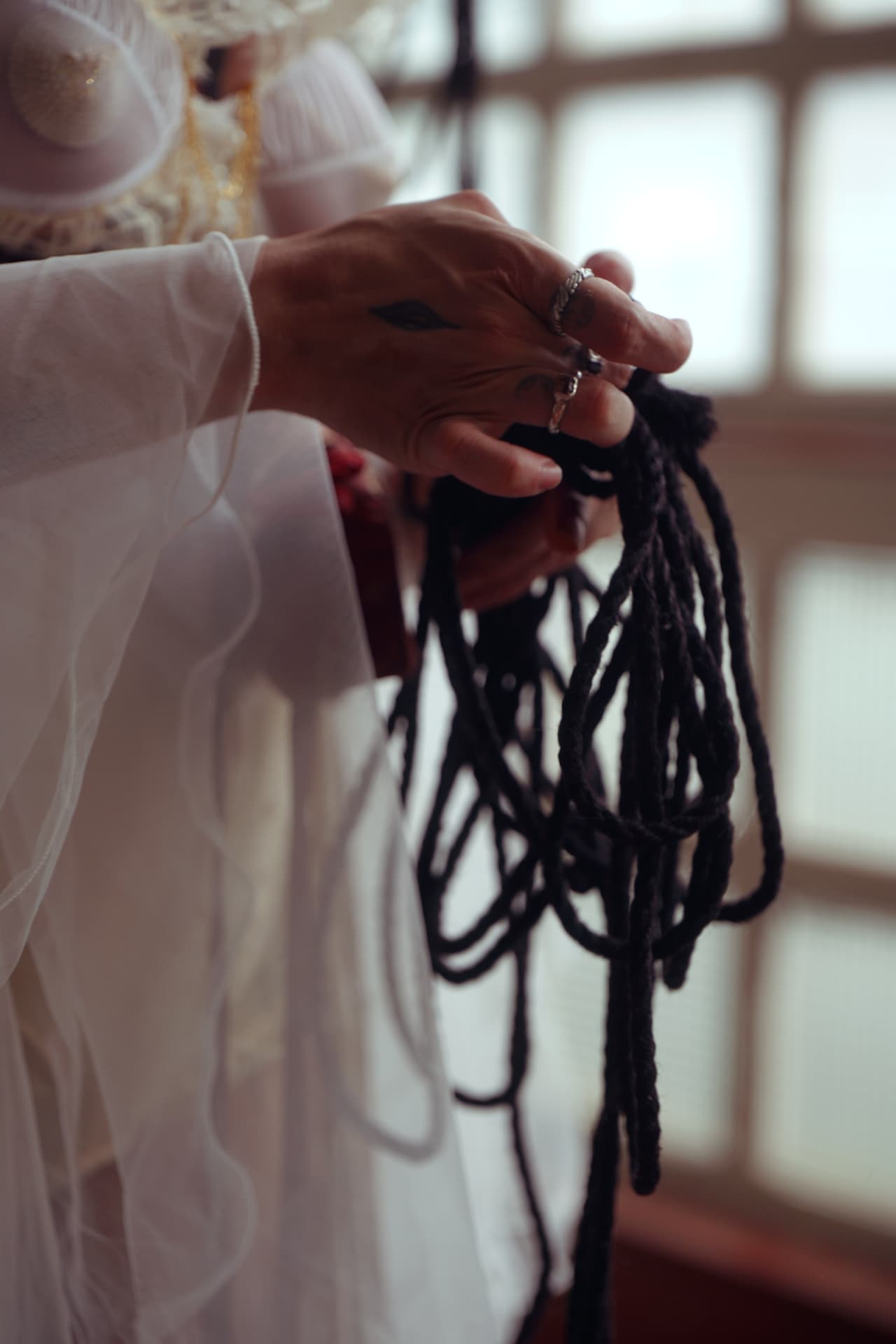

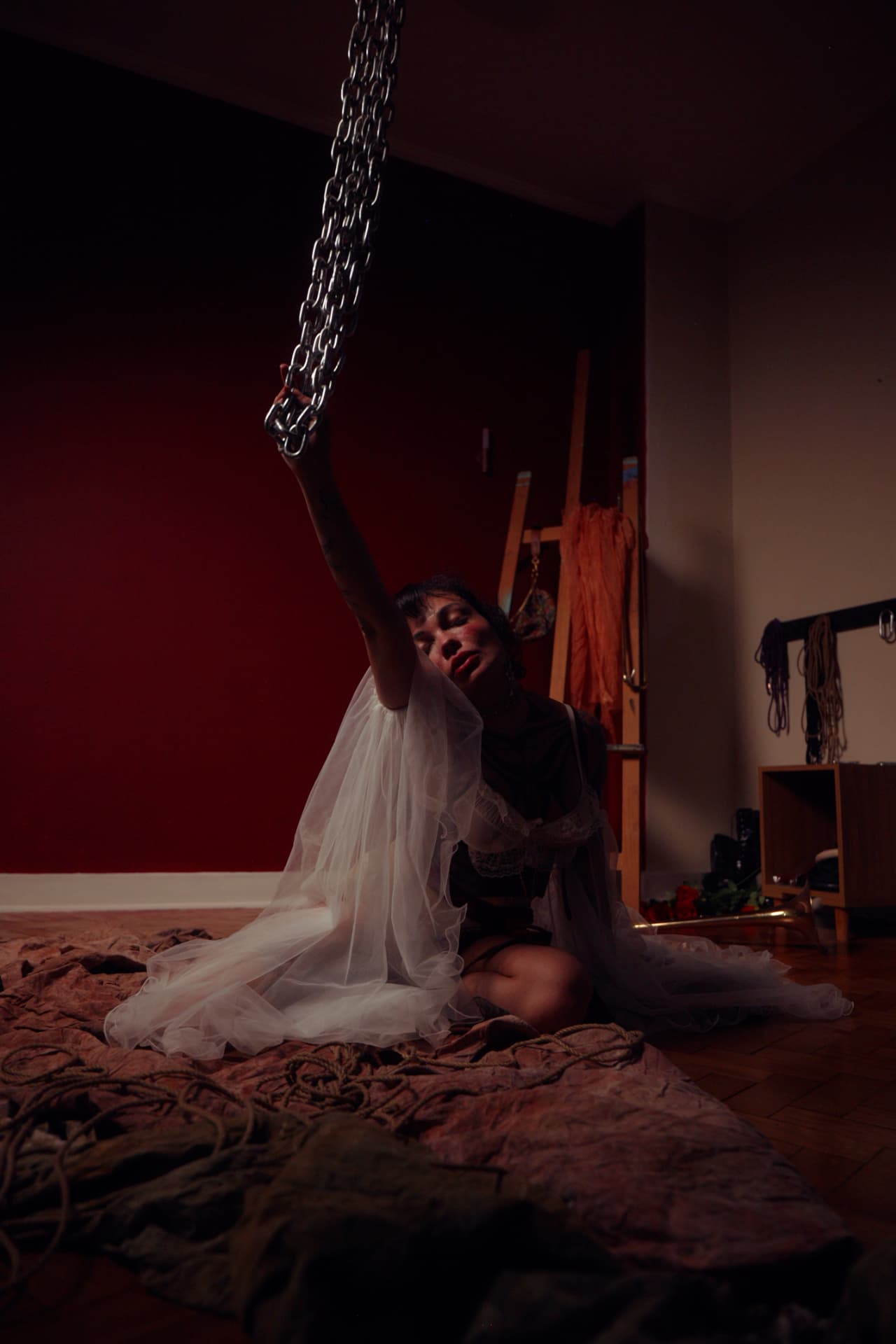
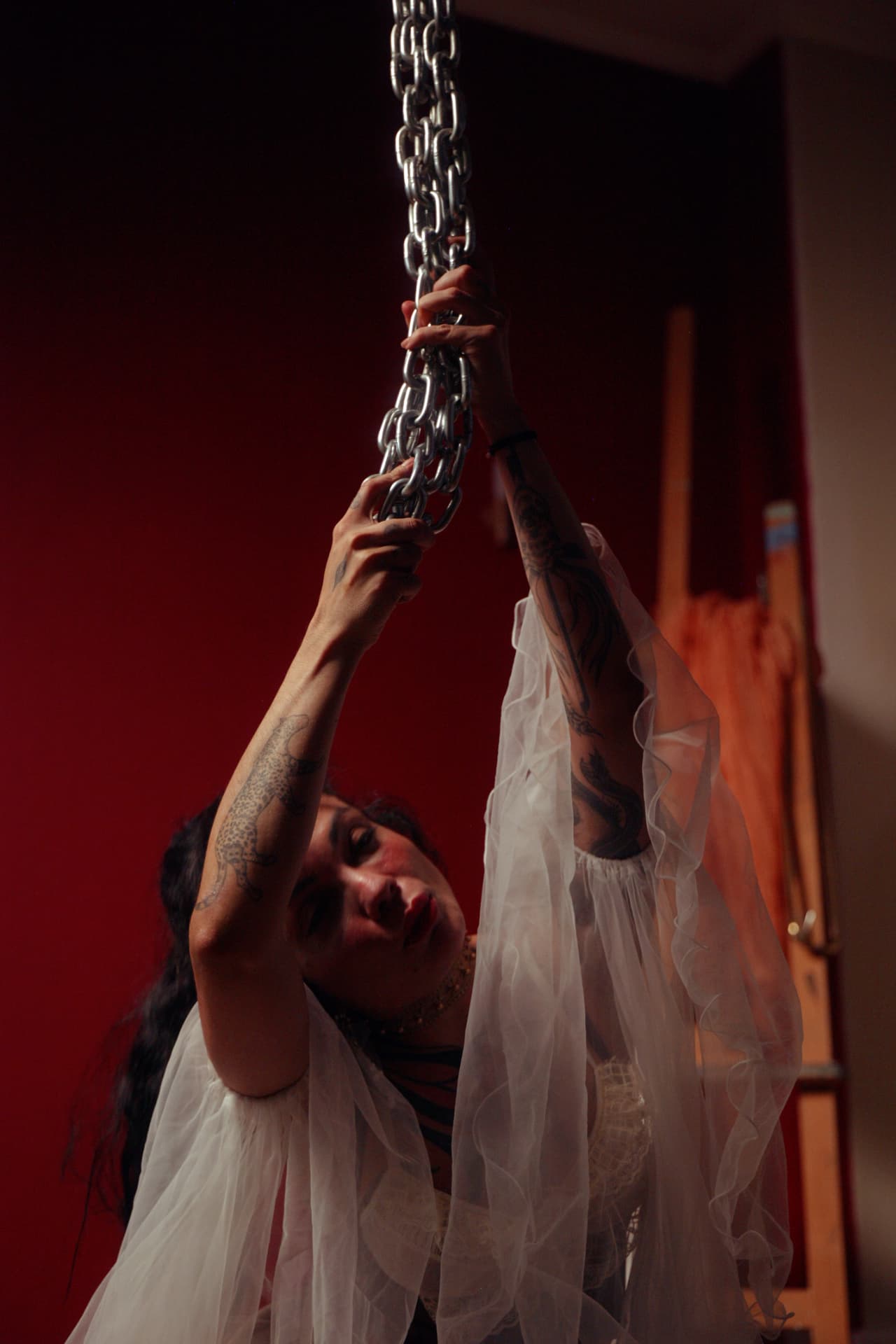


Teaser
O Peso do Sentir
The apparatus
MEDUSA
Invention patent
INPI — Brazil
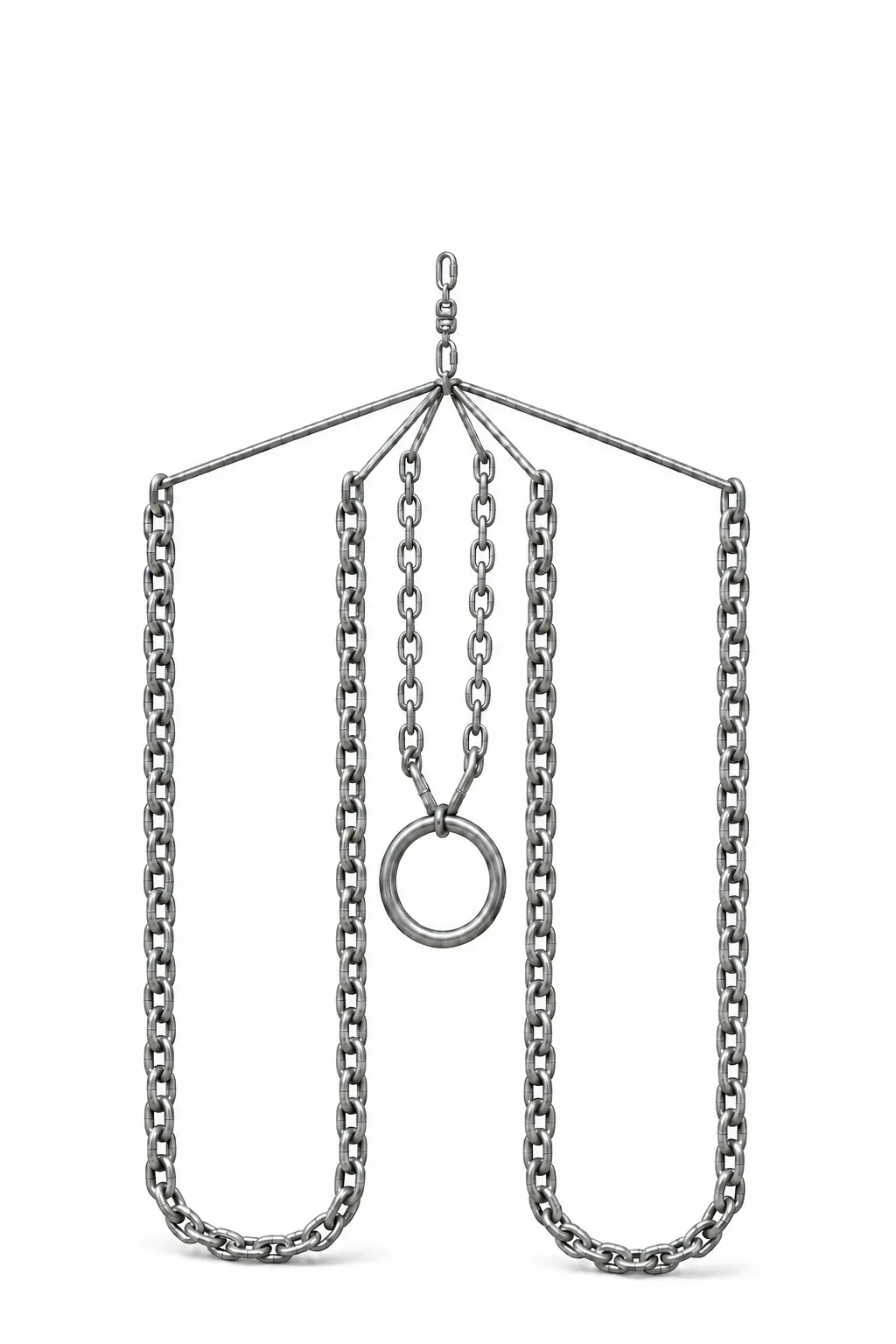
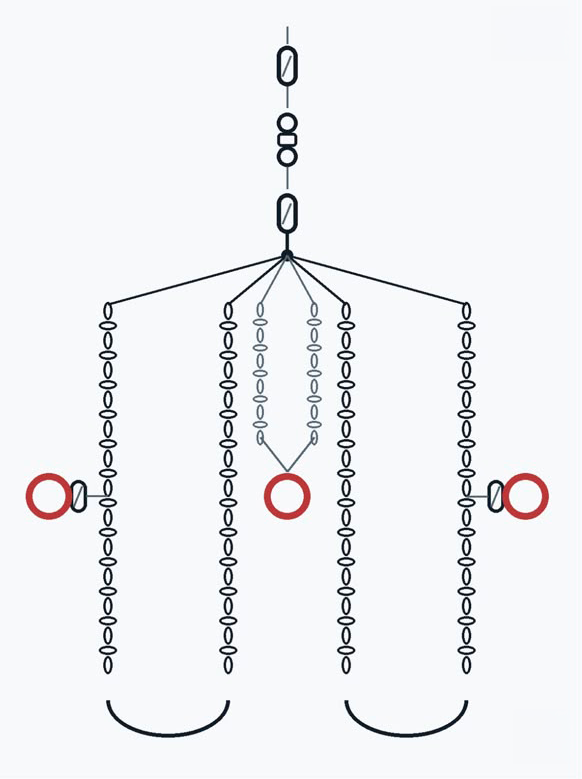
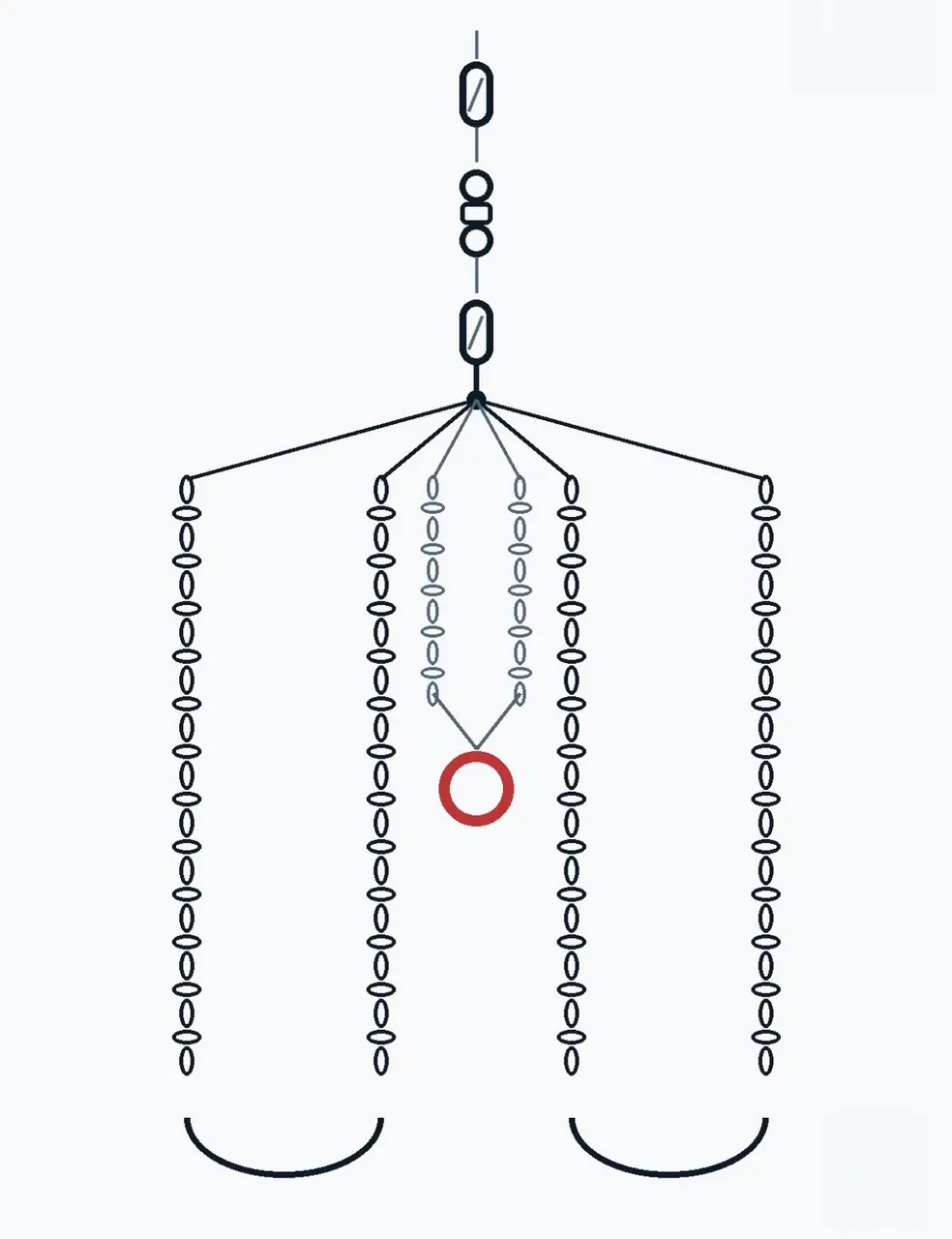
MEDUSA is the apparatus at the centre of the work, designed by Luiza Jesus do Prado. It combines chain suspension and rope suspension in a single structure hung from one swivel point: two continuous chain loops used as support points for the body, two central chains and a central ring for shibari ties. All chains hang from a common connector, with no rigid bar, so the structure moves with the body.
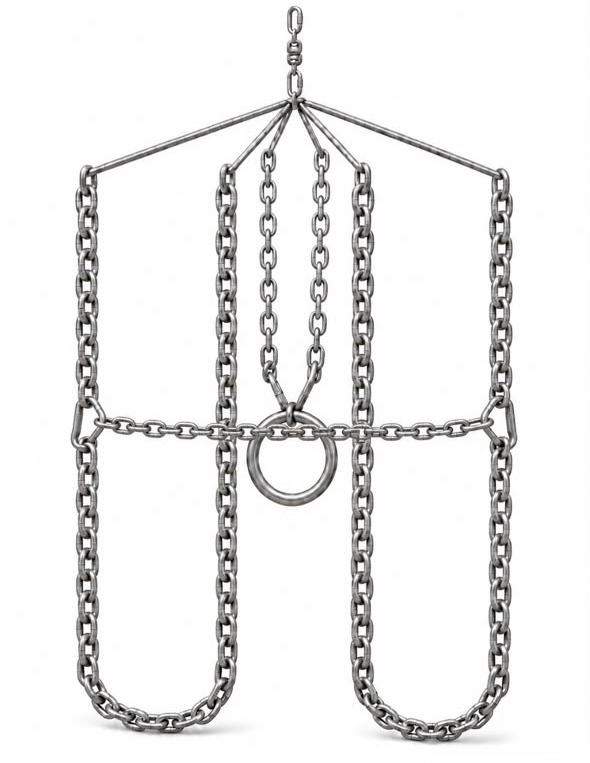
Medusa is a modular aerial apparatus: six continuous chain loops running from a single top anchor through a swivel, so the structure turns freely under load instead of twisting the strands.
Spreader bars keep the drops parallel and at fixed distance. A central ring gathers them, and a transverse chain passing through that ring links the outer legs — weight applied at any one point is redistributed across all six loops.
The U-shaped loops at the base and the paired rings on the outer legs are the integrated rope-connection points: rope, strap or body can be anchored at any height without knots, tools or re-rigging. Loop count, drop length and connection points are configured per use — suspension, support, restraint, or sculptural load.
First tests
Patent application in preparation (INPI, Brazil).