Intro
/ 01 — 2025
Research · data Light & sound In development since 2025
What Is Madness?
Allostatic Load · Observatory · Mandala of the Unconscious · Sirene · Nebulae · Catalysing Affect · Mapping · Street
An investigation into suffering, power and the conditions of existence. What do we call madness? Where does the individual end and the world that makes them ill begin?
© 2025
01
The investigation
What Is Madness? is an artistic, scientific and technological investigation into the relations between mental health, conditions of existence and structures of power. It starts from the hypothesis that psychological suffering cannot be understood only as an individual phenomenon, separate from the social, political, economic, historical and environmental conditions in which life takes place.
Human experience is crossed by forces we cannot always perceive directly: violence, hunger, war, precarity, racism, exclusion, isolation, climate change and material insecurity. These conditions do not only organise society. They also run through bodies, nervous systems, processes of adaptation and the possibilities of existing.
By bringing together environmental and social data, neuroscience, biochemistry, image, light and sound, the project seeks to make some of these relations perceptible. Science provides instruments to observe what escapes immediate experience; art creates other ways to experience, interpret and question these phenomena.
The research also turns to the history of psychiatry and to the practices of confinement that turned certain differences, behaviours and forms of suffering into grounds for exclusion. In dialogue with the anti-asylum movement, the Brazilian Psychiatric Reform and decolonial thought, the project asks who has the power to define normality, which lives are considered legitimate and which historical conditions make certain populations more vulnerable to suffering and to institutional violence.
The question is no longer only what happens inside a person, but also what happens around them, to them and through them.
From this perspective, madness is not presented as a universal, fixed category independent of context, but as a field of dispute between subjective experience, scientific knowledge, social conventions and relations of power. This does not mean reducing mental disorders to social conditions, but investigating how biological, environmental and historical factors combine in the production of suffering.
The project unfolds into data visualisation systems, generative compositions, light and sound installations, mandalas, objects and interventions in public space. These works turn information into sensory experience and create correspondences between scales: from the molecular to the bodily, from the individual to the collective, from the territory to the planet.
By moving the investigation from the clinic to the gallery and the street, the project also moves the question itself. The city is no longer only the setting where life happens; it becomes an active part of the conditions that shape it.
What is madness? What do we call normality? And what happens when we examine not only those who fall ill, but also the world they are forced to live in?
02
Five axes
The project is organised around five connected axes, so that it does not become a collection of separate subjects.
1. The body as territory. The body is not an isolated unit: it is a biological system in permanent relation with its environment. Stress, adaptation, metabolism and the nervous system are the entry point to investigate how the conditions of existence affect physiology. In the project: the Allostatic Load lab, which links each factor to mediators of stress and care.
2. The making of normality. Who defines what is normal, pathological or deviant? The history of the asylum, medicalisation and systems of classification show how knowledge about mental health is also shaped by institutional interests, inequality and exclusion. In the project: the critique of the asylum and the Masks, in dialogue with Frantz Fanon.
3. The geography of suffering. Different territories produce different exposure to violence, precarity and environmental risk. Data make it possible to investigate these inequalities without treating suffering as a private failure of those who live it. In the project: the Observatory, which reads each event by place, and Sirene, which changes with the city where it is shown.
4. Translating the invisible. Data, substances, frequencies and statistical relations become image, light, sound and movement. Visualisation is not only scientific illustration: it is a language for producing other forms of perception. In the project: cymatics, the light of Sirene and the Mandala of the Unconscious, in dialogue with Nise da Silveira.
5. Returning to public space. By leaving the gallery and occupying the city, the research turns a question that seems individual into a collective one. Public space becomes a place where experience, knowledge and social responsibility meet. In the project: the projection-mapped videos and urban interventions, such as at the Minhocão.
03
The asylum
For centuries the asylum was where society sent the people it did not want to see. In History of Madness (1961), Michel Foucault shows the poor, the unemployed and the 'mad' locked up together. In Brazil, at the Colônia hospital in Barbacena, at least 60,000 people died between the 1930s and the 1980s, and about 70% of those interned had no diagnosis of mental illness (Daniela Arbex, Holocausto Brasileiro, 2013).
The label 'mad' has been used to set apart the poor, Black people, gender dissidents, migrants and those who disobey. The project turns the question around: not 'what is wrong with this person?' but 'what was done to them, and where do they live?'. Locking up the individual hides the cause. The project stands with the anti-asylum movement and Brazil's Psychiatric Reform (Law 10.216/2001).
04
Mandala and mask
Two psychiatrists of the same period worked against the asylum. At Engenho de Dentro, in Rio de Janeiro, Nise da Silveira studied the mandalas painted by patients and founded the Museum of Images of the Unconscious. The mandalas in this project speak to that work: the form that comes from within.
At the Blida hospital, in Algeria, Frantz Fanon showed that colonialism makes people ill. In Black Skin, White Masks (1952), the mask is the identity imposed by racism. Here the mask stands for the label imposed from outside, and the light shows what actually weighs on each place.
05
Antecedent: Social Hacker
What Is Madness? continues Social Hacker (2019), which investigates the invisible protocols of social life, the codes, permissions and exploits of belonging, through stereograms, agricultural landscapes and systems seen from above.
The project keeps that view from above: each place is read as a system that can make people ill, and the territory becomes the axis of the geography of suffering. Images: Social Hacker stereograms, 2019.


06
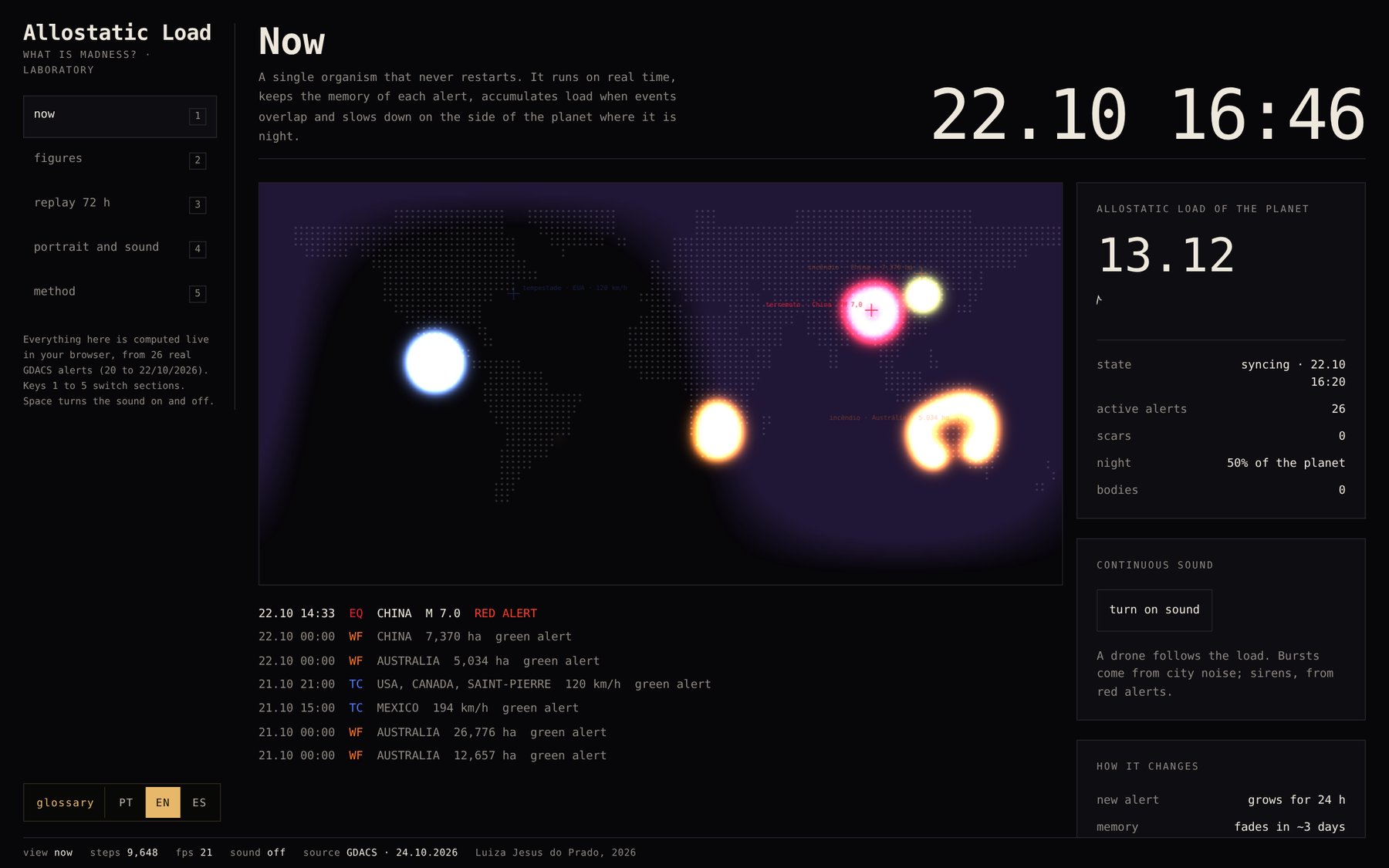
Allostatic Load, the lab
Allostatic load is the wear the body accumulates from adapting again and again to stress (McEwen and Stellar, 1993). The lab applies the idea to places. It follows 17 places and the whole world, from South Sudan to Tromsø, with open data from scientific sources and international agencies: disasters, heat, air, conflict, hunger, displacement, money, and care as a counterpoint.
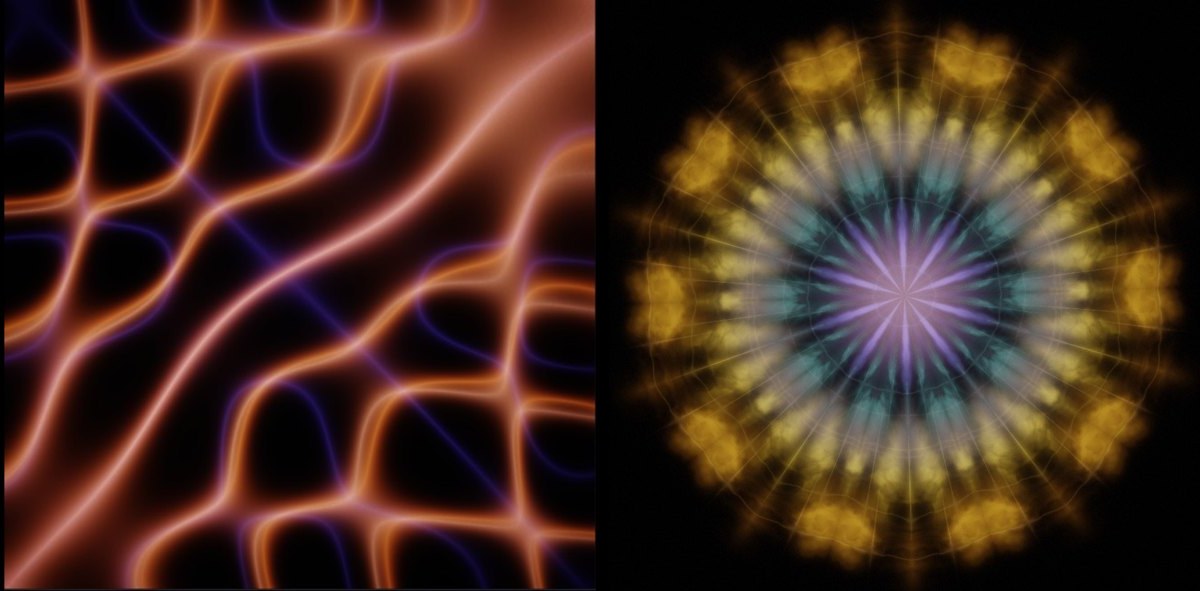
Each factor is linked to the substances the body releases in response, such as cortisol, noradrenaline, oxytocin and GABA. Each substance has a fixed colour, and its molecular mass becomes a frequency. The result is a living figure, a cymatic figure, a mandala and a continuous sound for each place.
07
Observatory
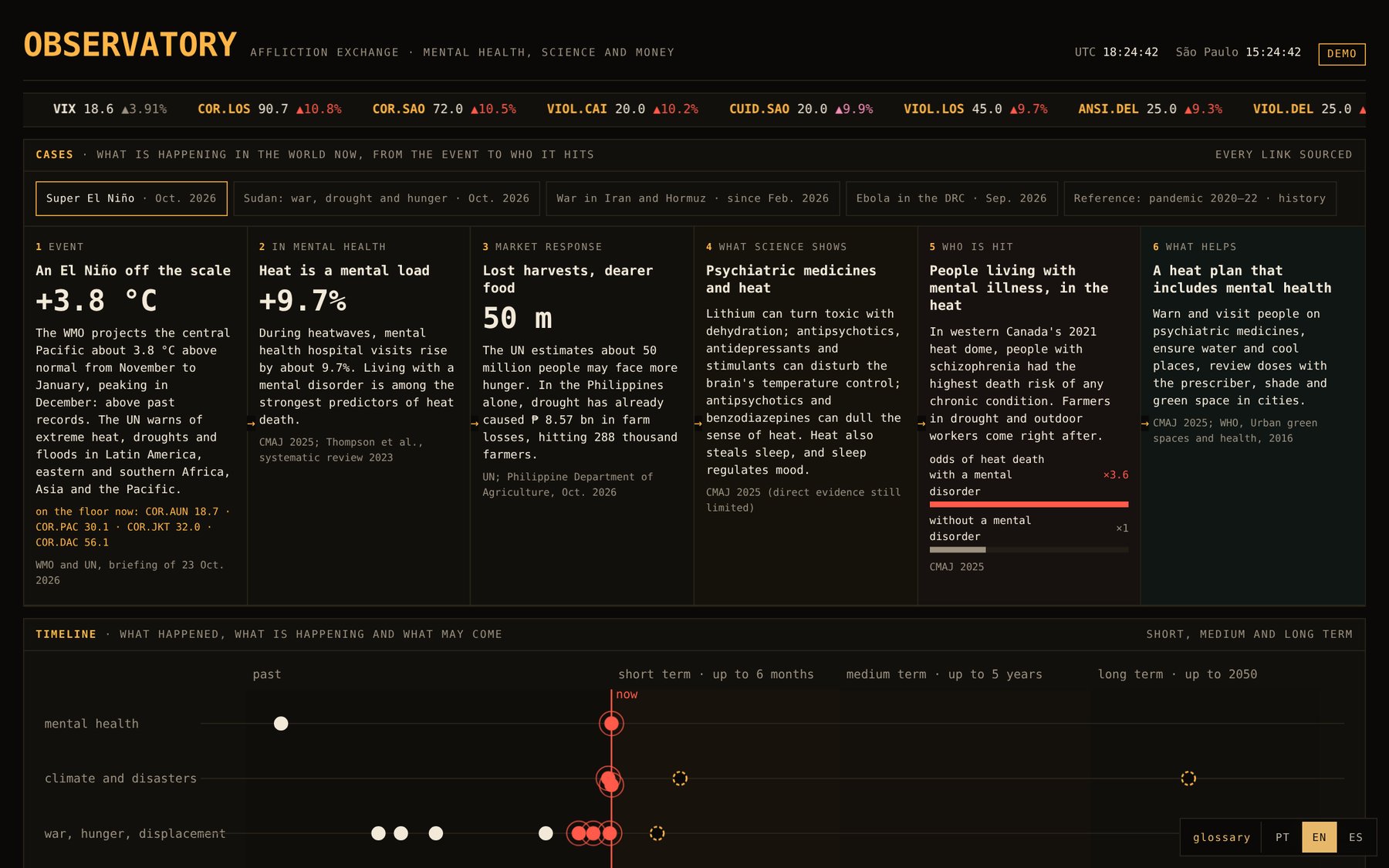
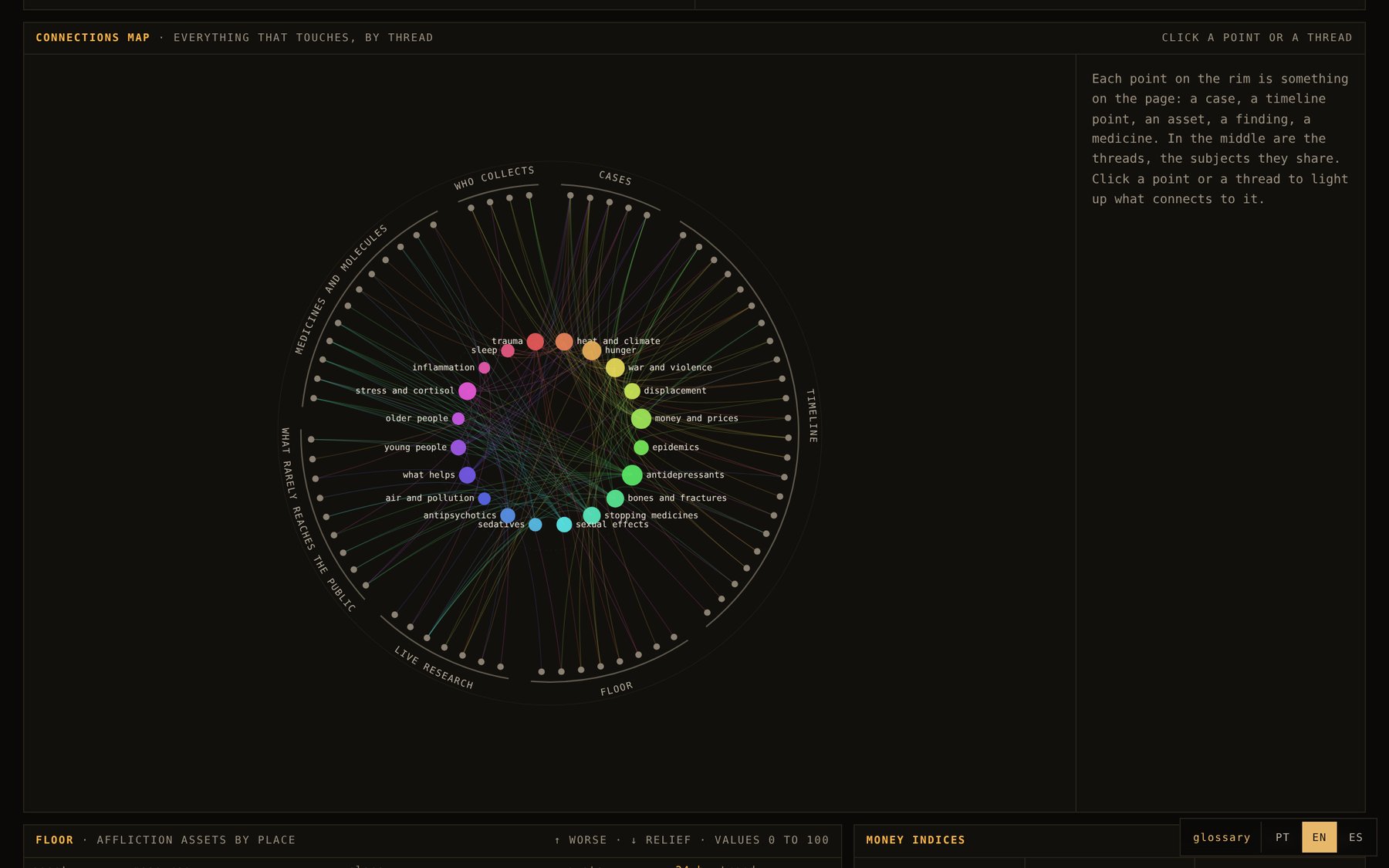
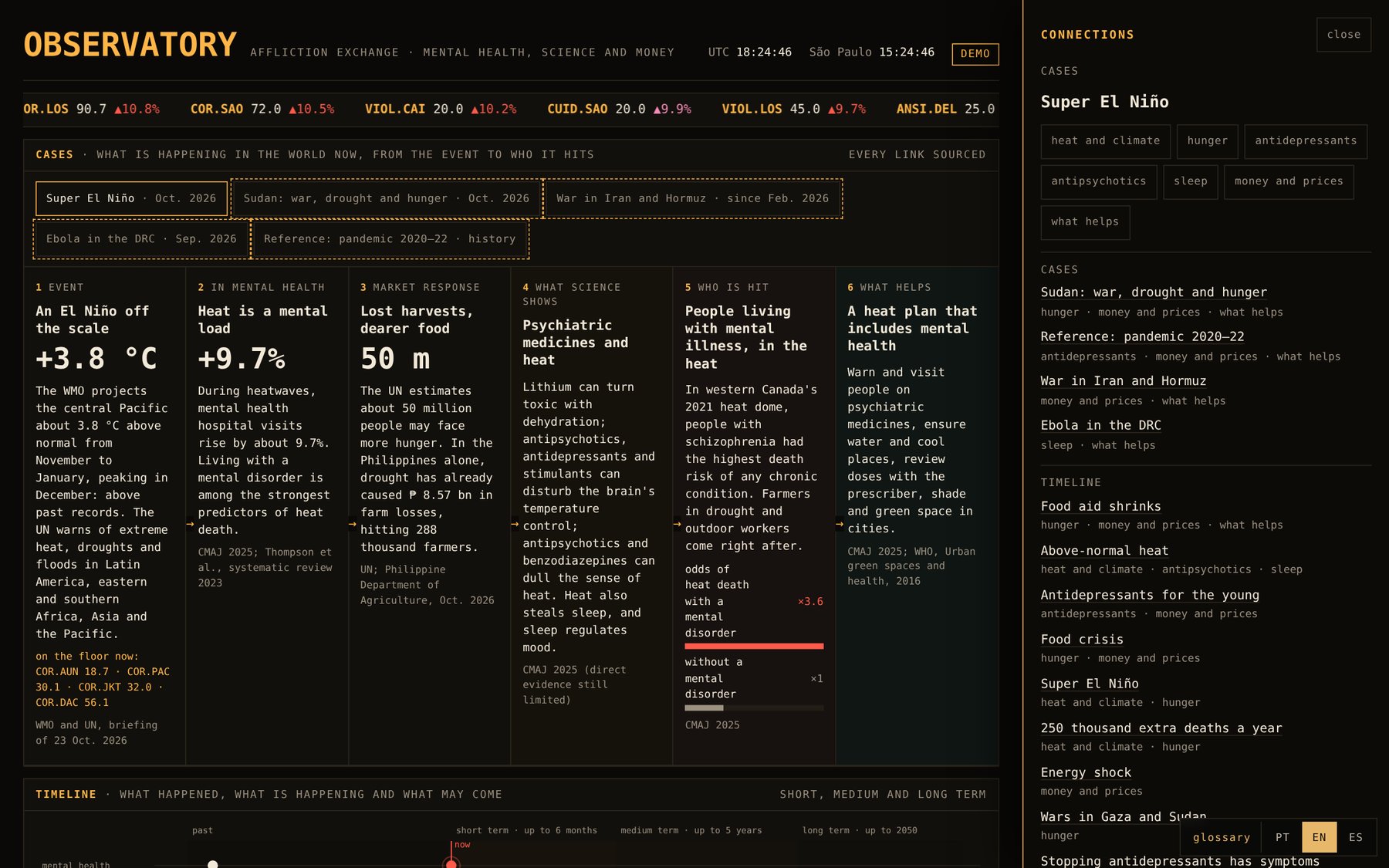
A research panel that links each event to who suffers, who profits, what science shows and what helps. It has a timeline up to 2050, indices of affliction by place, live research collected every day, little-known effects of psychiatric medicines, and a map where clicking any item shows everything connected to it.
08
Mandala of the Unconscious
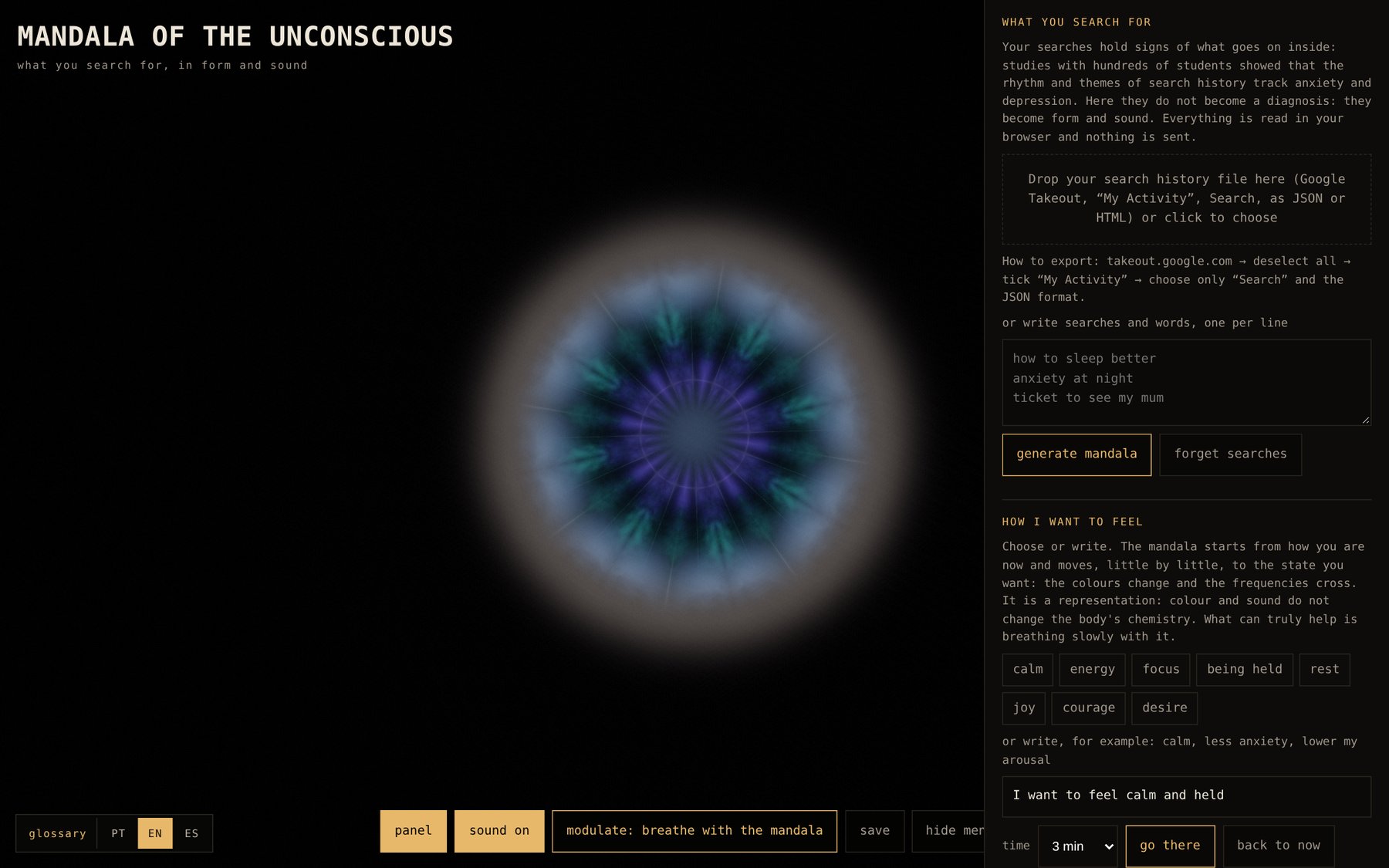
A personal work. A person gives it their own search history, or types words, and it draws a mandala of 19 substances in colour, form and sound. Nothing leaves the browser. In intention mode, the person writes how they want to feel, and the mandala moves slowly from their current chemistry to the one they asked for. It is a representation, not a treatment.
09
Sirene
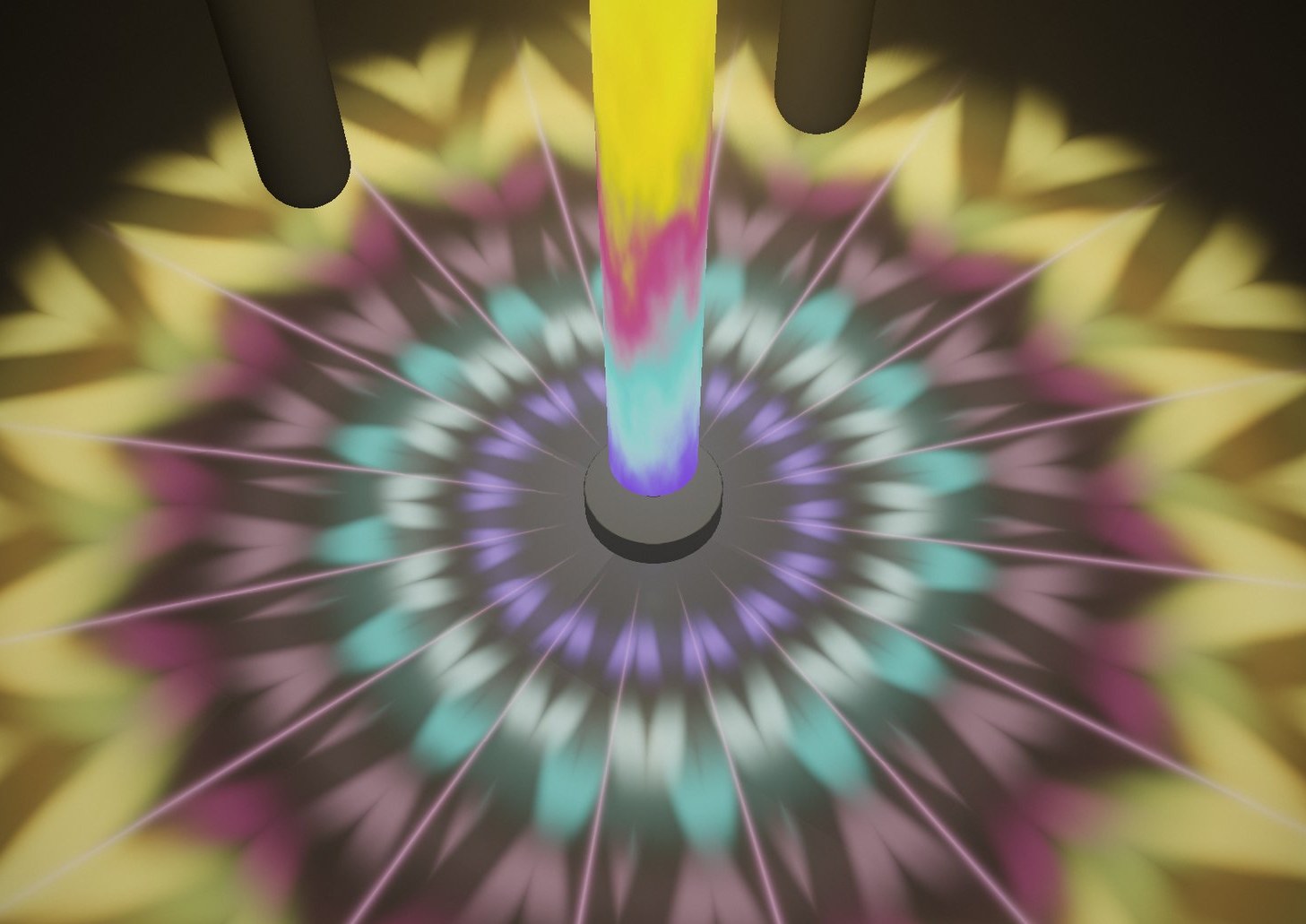
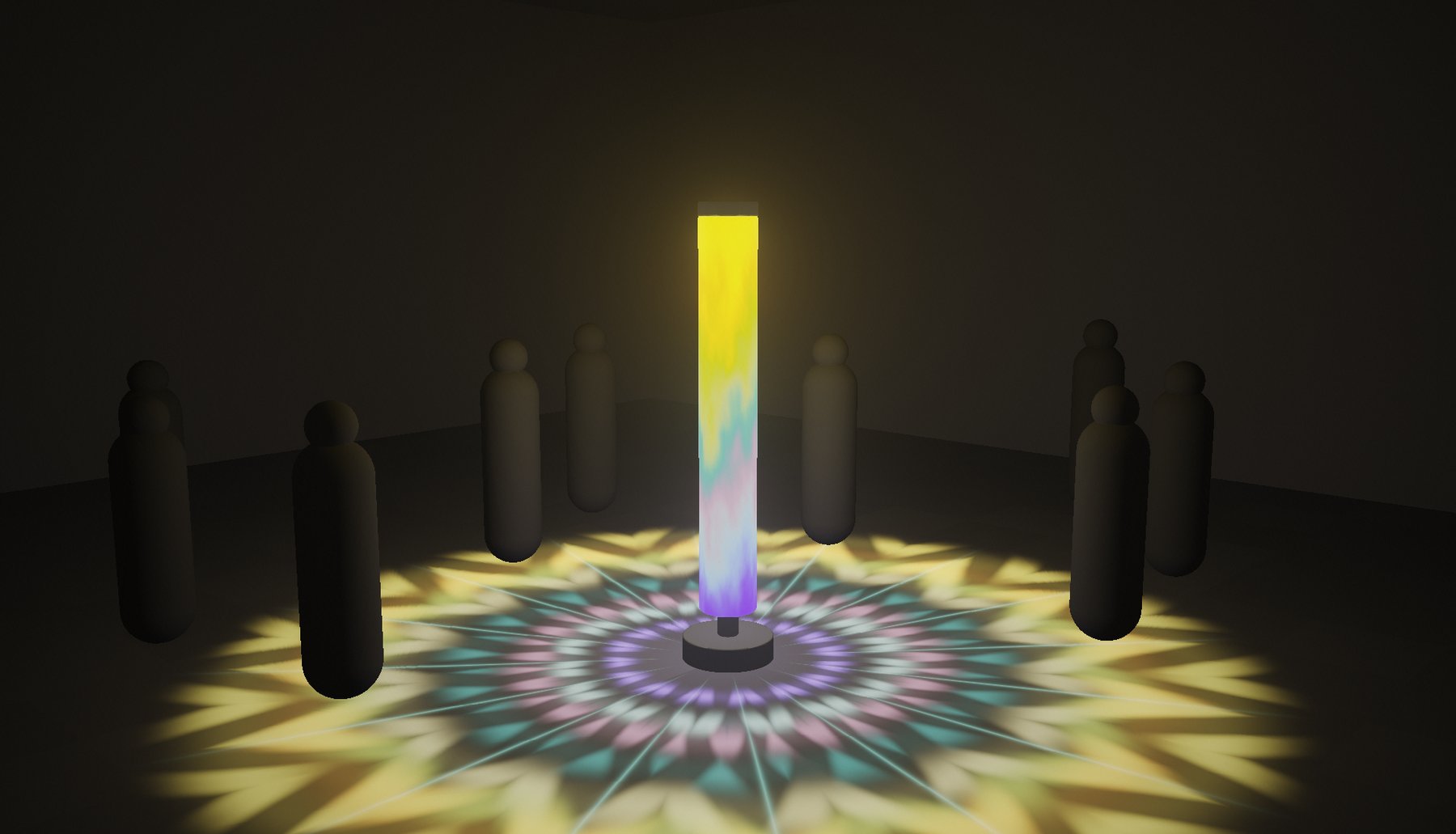
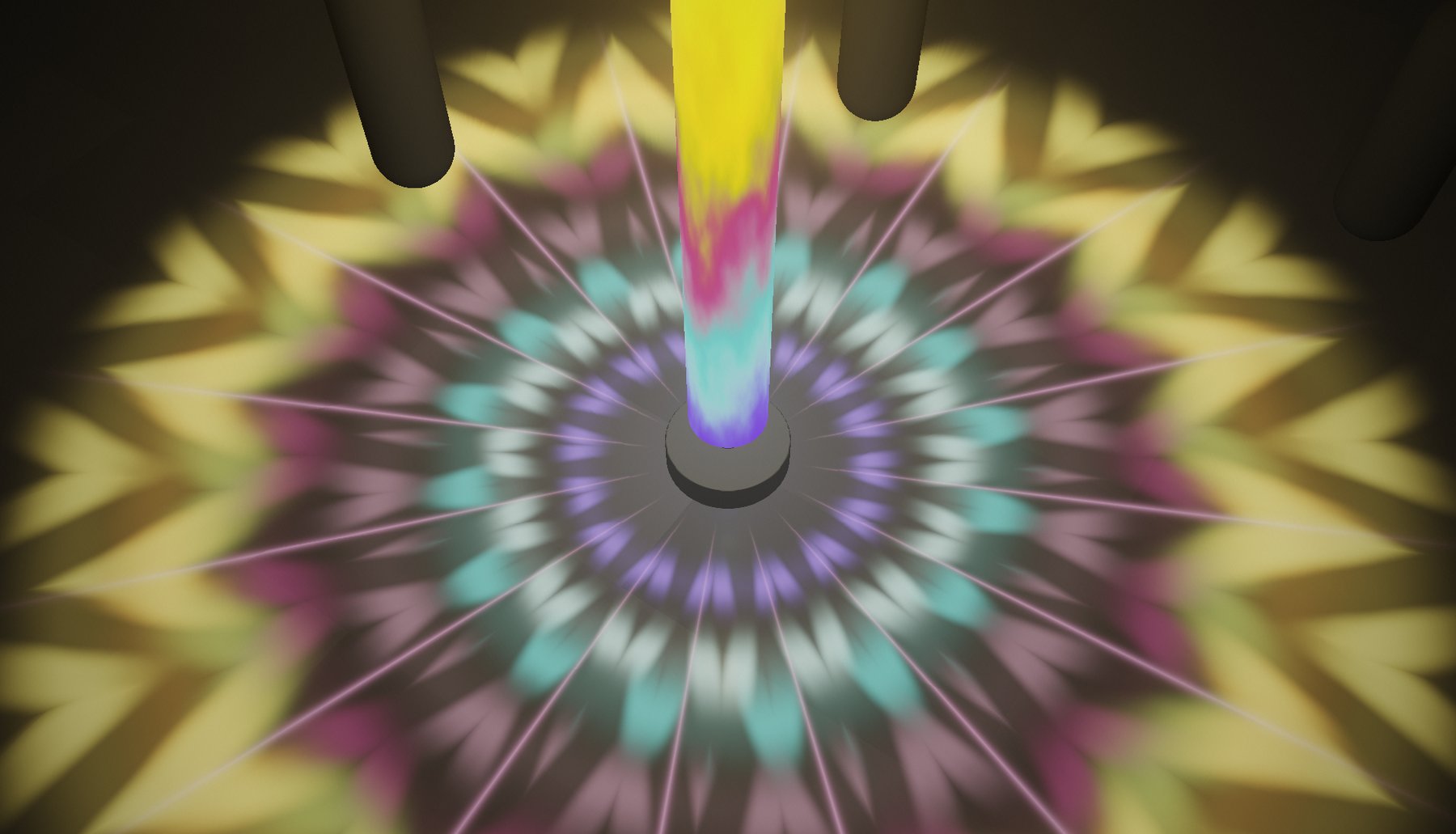
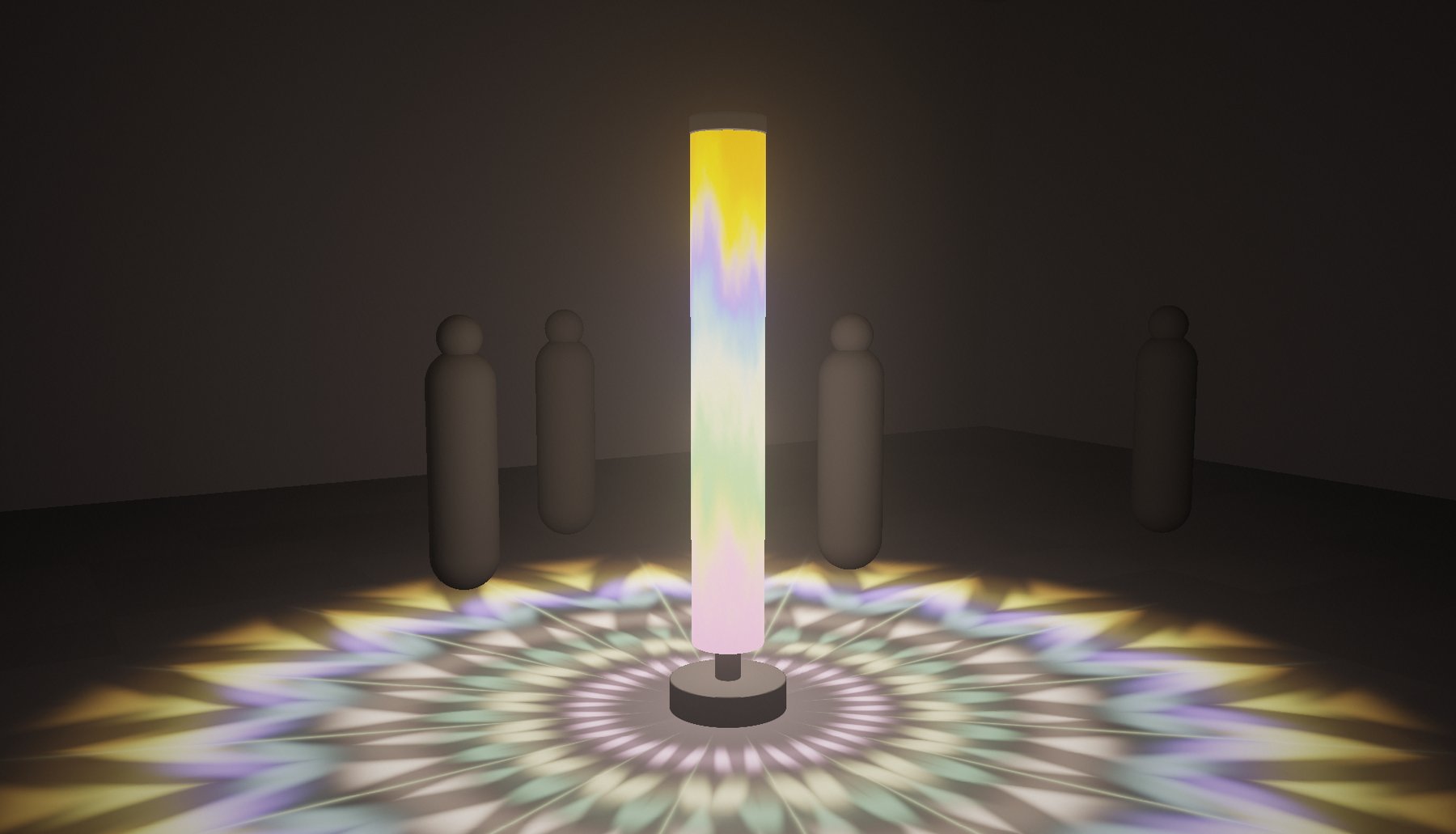
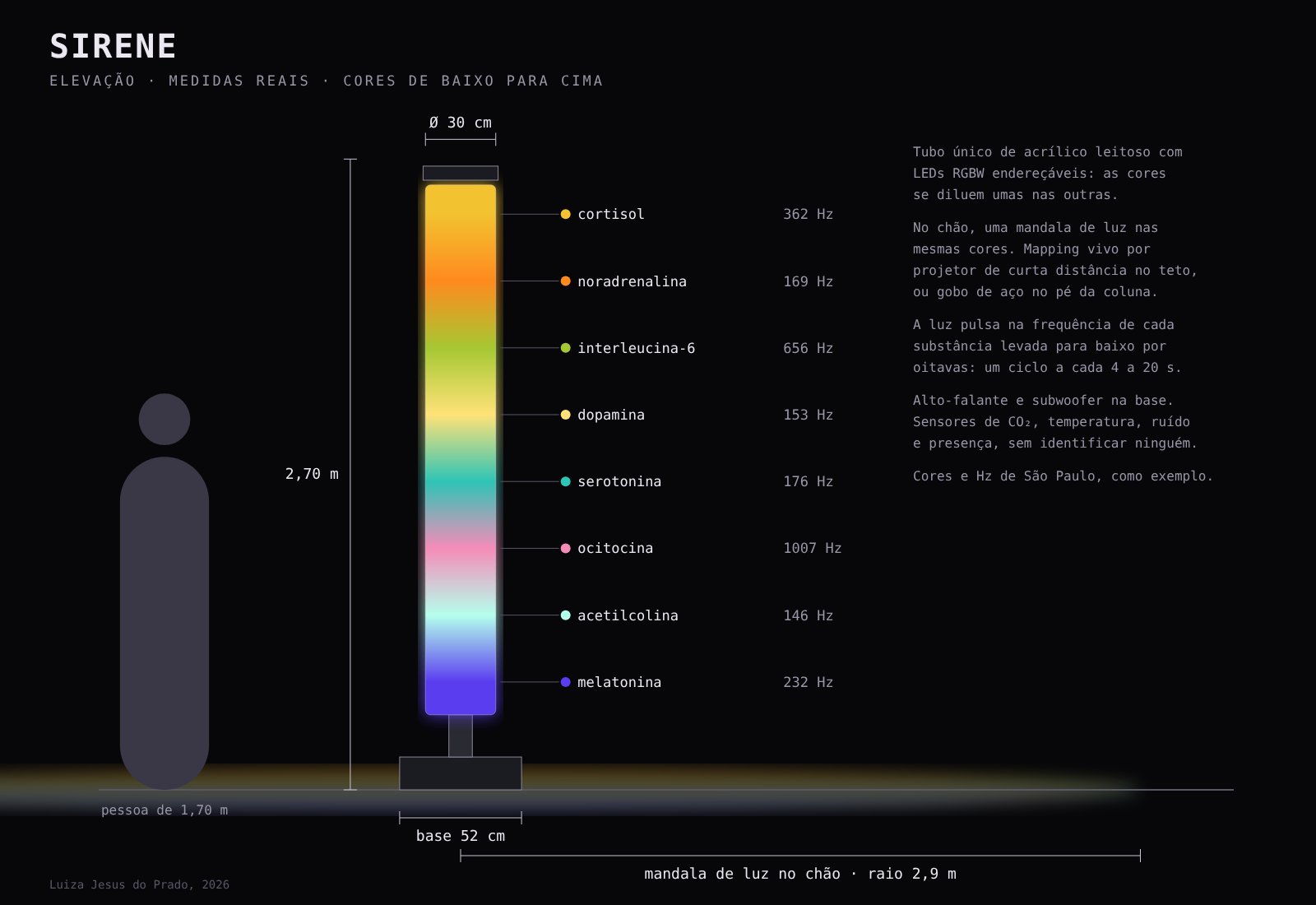
A light and sound object for galleries: a 2.70 m column of light in which the colours of the substances blend into each other, and a mandala of light on the floor that keeps changing with the data. The sound is a continuous chord with no alarm, because a siren sound can trigger people.
The room counts too: the city's data, anonymous sensors (CO₂, temperature, noise level without recording, presence) and visitors who say, by QR code, how they arrived and how they want to leave. No phone is identified and nothing is stored. Images: 3D simulation.
10
Nebulae: atlas and installation
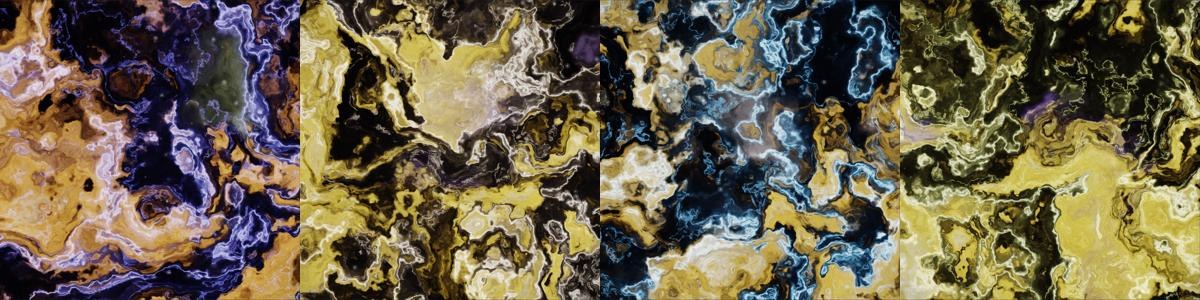
The nebulae leave the lab and become fixed, physical works chosen by the artist: print, light and projection.
Atlas. A fixed series of 5 to 7 large-format prints or lightboxes. Each image carries the name of a place and the date it was generated. It is neither updated nor sold as a series: it is a record, like the plates of an atlas, tied to the geography of suffering axis.
Nebula, a light installation. Light passes through a shallow tank of water or through textured or dichroic glass panels and projects clouds and filaments onto the ceiling or wall. A speaker fixed to the tank plays the frequencies of the place's substances, and the water vibrates with them; with glass, the panels turn slowly. The stimulus can also come from the people in the room: breath, pulse or Sirene's anonymous presence and noise sensors. Materials and dimensions will be defined in a prototype.
Masks. The nebula projected onto the masks: the mask is the label imposed from outside, and the light shows what weighs on each place.
Mapping. The nebula as the background of the projection-mapped videos, with the project's question.
11
Map of care and Catalysing Affect
An idea I want to develop. The map of care already exists online; Catalysing Affect is the installation that grows out of it.
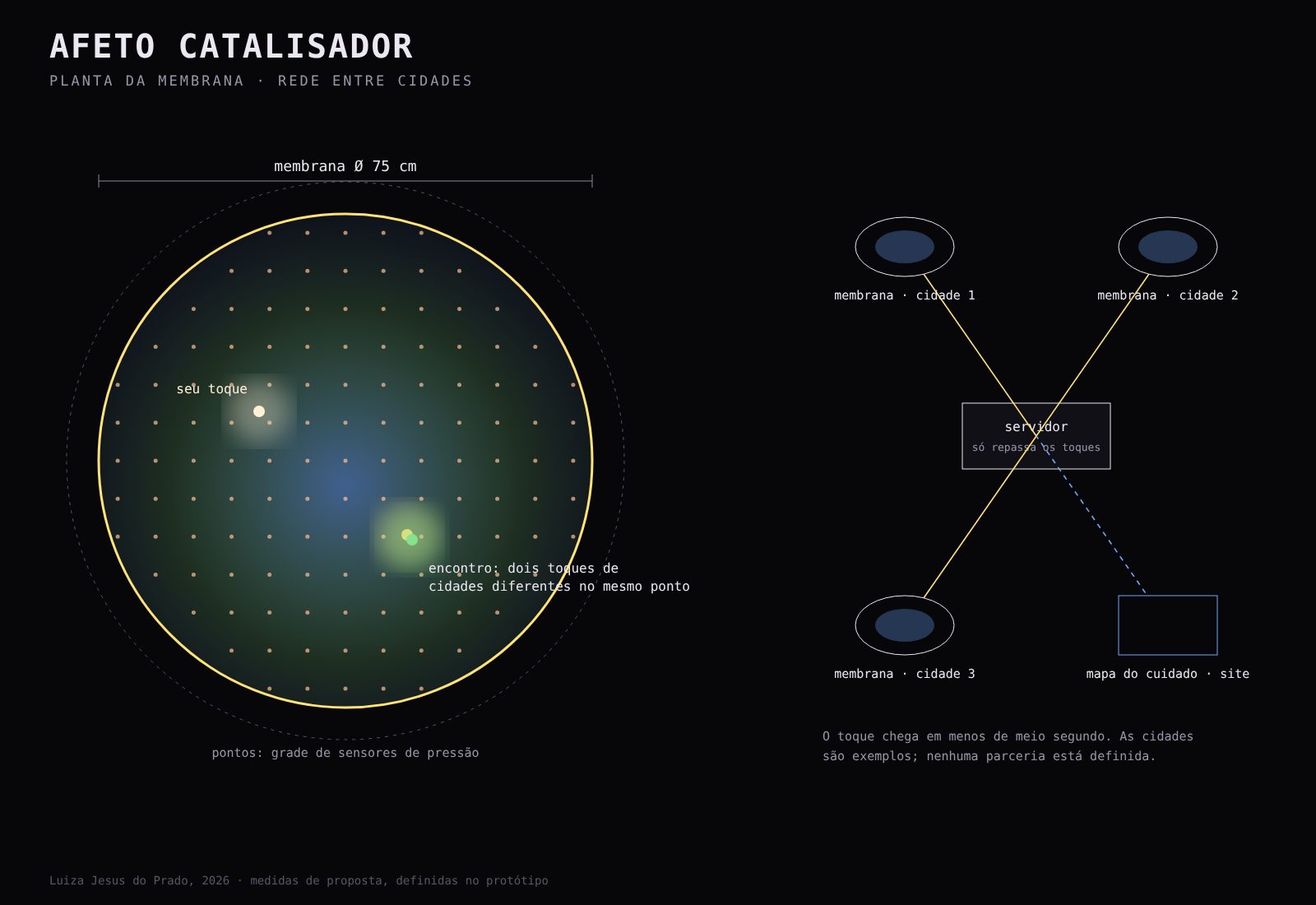
The map of care is the reverse of the load: where people hold on. Each place's light comes from aid and cooperation reported in the news and from searches and posts of hope; threads link places where care is present at the same time.
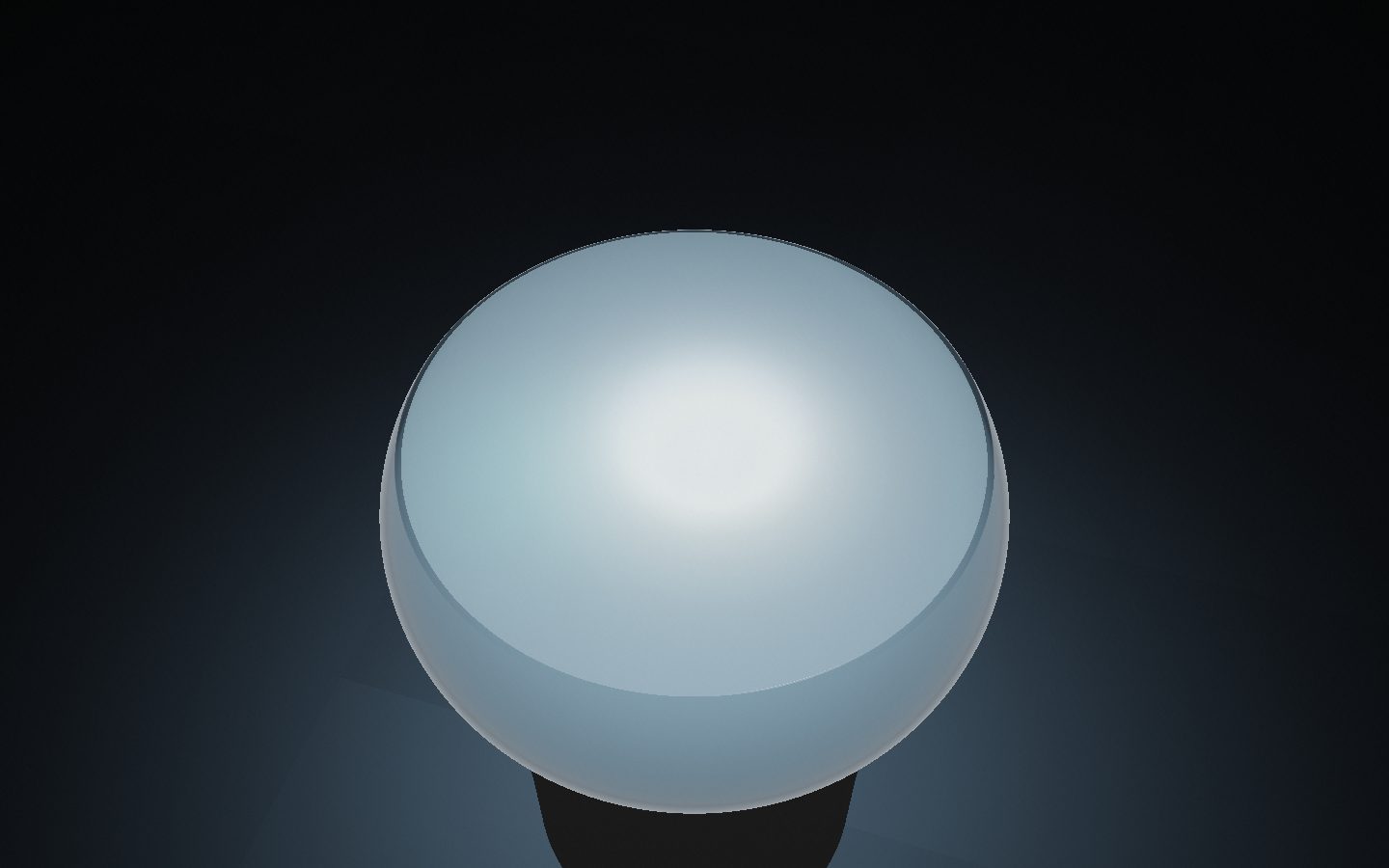
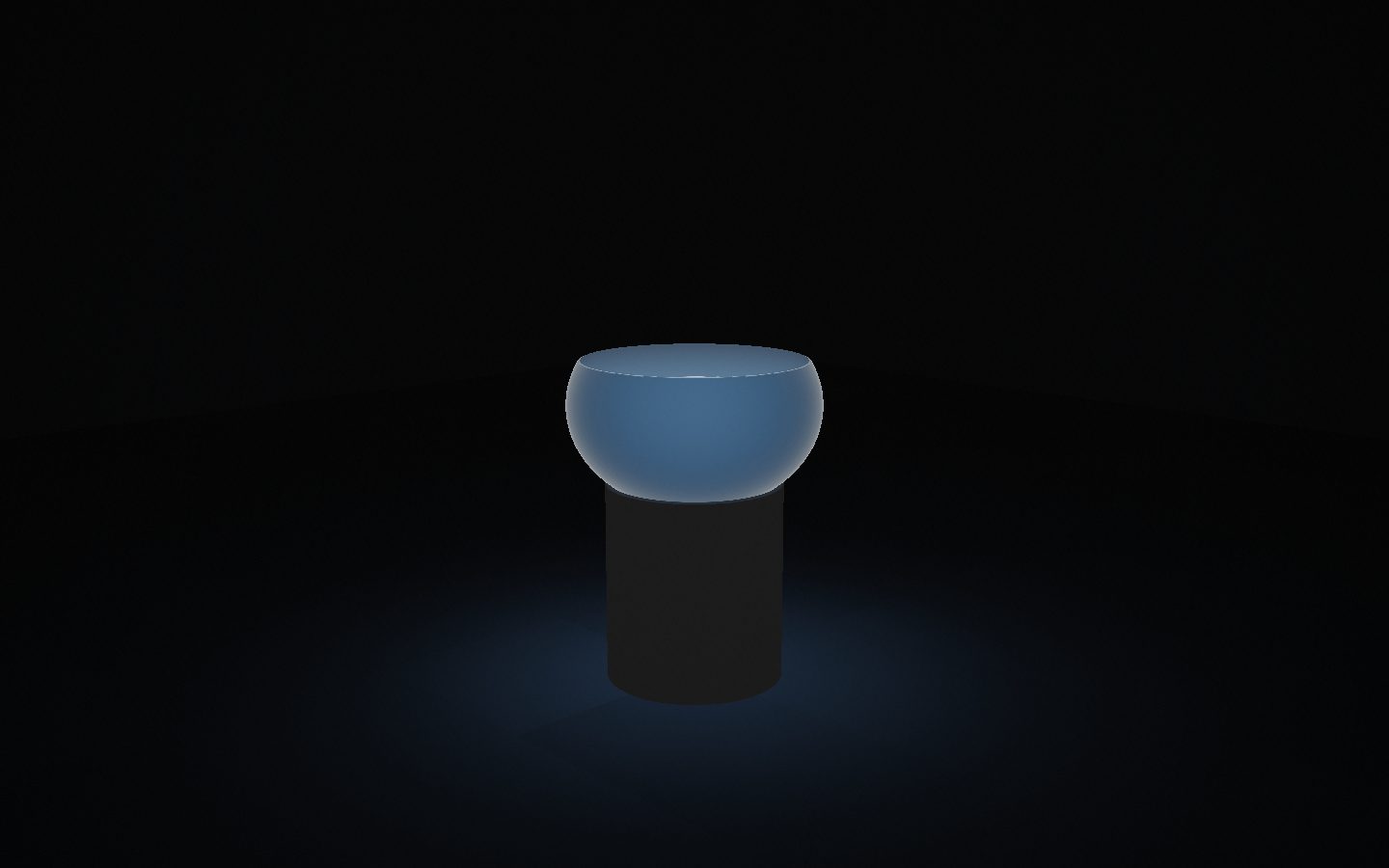
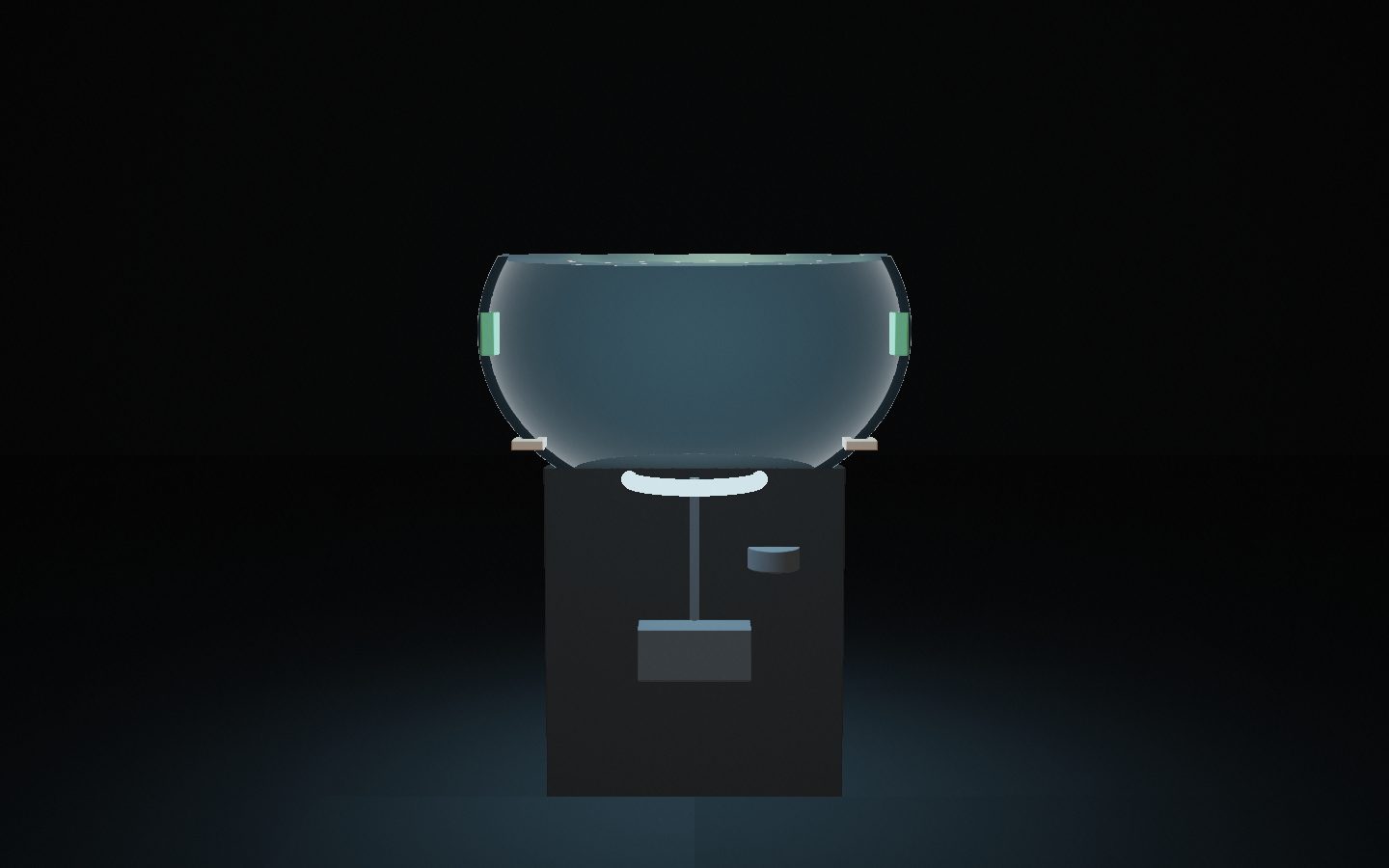
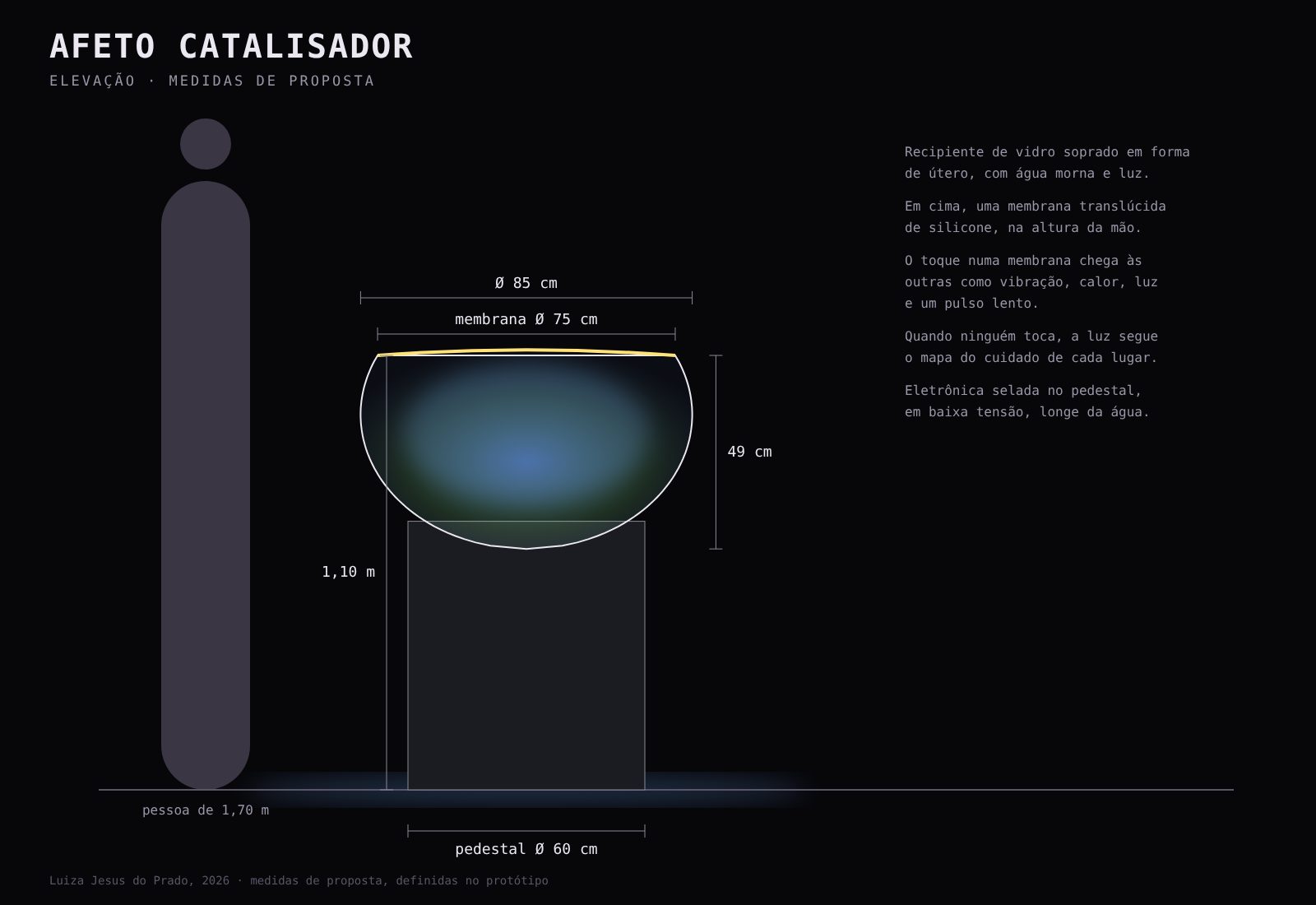
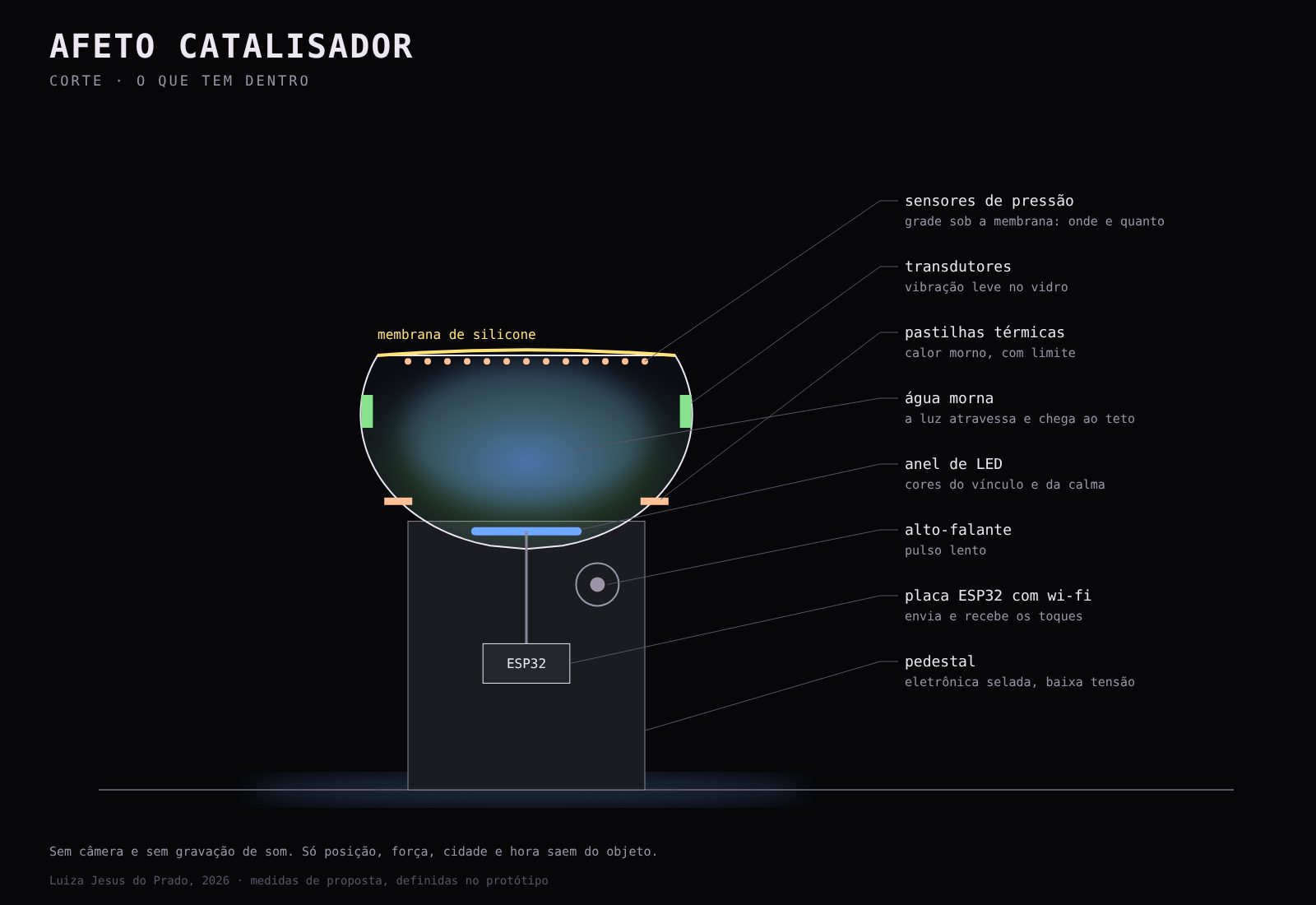
Catalysing Affect is its installation: a womb-shaped glass vessel with warm water and light, covered by a translucent membrane, installed in several cities. When someone touches one membrane, the others feel it on the same spot: it vibrates gently, warms a little, lights up in the colour of the place the touch came from, and a slow pulse sounds. Whoever is on the website can touch too. The name comes from Nise da Silveira, who called the bond that helps healing a catalysing affect.
12
Mapping and the street
Projection-mapped videos made from the images the data generate (mandalas, cymatics, the nebulae as background) and from the project's question, for façades, blank building walls and Sirene itself. The first study shows the question in white letters over blue liquid forms.
The question leaves the gallery for the street: 'What is madness? What is sanity?', in places people pass through in São Paulo, such as the Minhocão (Elevado Presidente João Goulart), the elevated highway that closes to cars and becomes a leisure space at night and on weekends. Formats: projection mapping on the building walls along it, posters and banners with a QR code to the lab, and a version of Sirene in public space. The interventions depend on permits from the City of São Paulo and the building owners.
13
Where the data come from
All data are open and public, from international agencies, scientific institutions and recognised databases, aggregated by place. No source identifies people.
Disasters: GDACS (UN and European Commission), USGS. Heat and air: Open-Meteo, Copernicus CAMS. Conflict and cooperation: GDELT, UCDP (Uppsala University). Hunger, war, displacement: HDX HAPI (UN OCHA) with ACLED, IPC, IOM, UNHCR. Economic indicators: World Bank, FRED. Distress and hope: Wikipedia pageviews and public Bluesky posts, counts only. Science: Europe PMC, ClinicalTrials.gov. Medicines: openFDA. Molecular mass: PubChem (NIH).
14
Weekly bulletin
Every Monday the project closes the week in a numbered bulletin: one image, one sound track and one data page. The image is sold directly by the artist and the track is released on streaming platforms; part of the income goes to institutions that care for the causes the work shows, with public monthly accounts.
The works are free, open, without login, in three languages, with open code.